
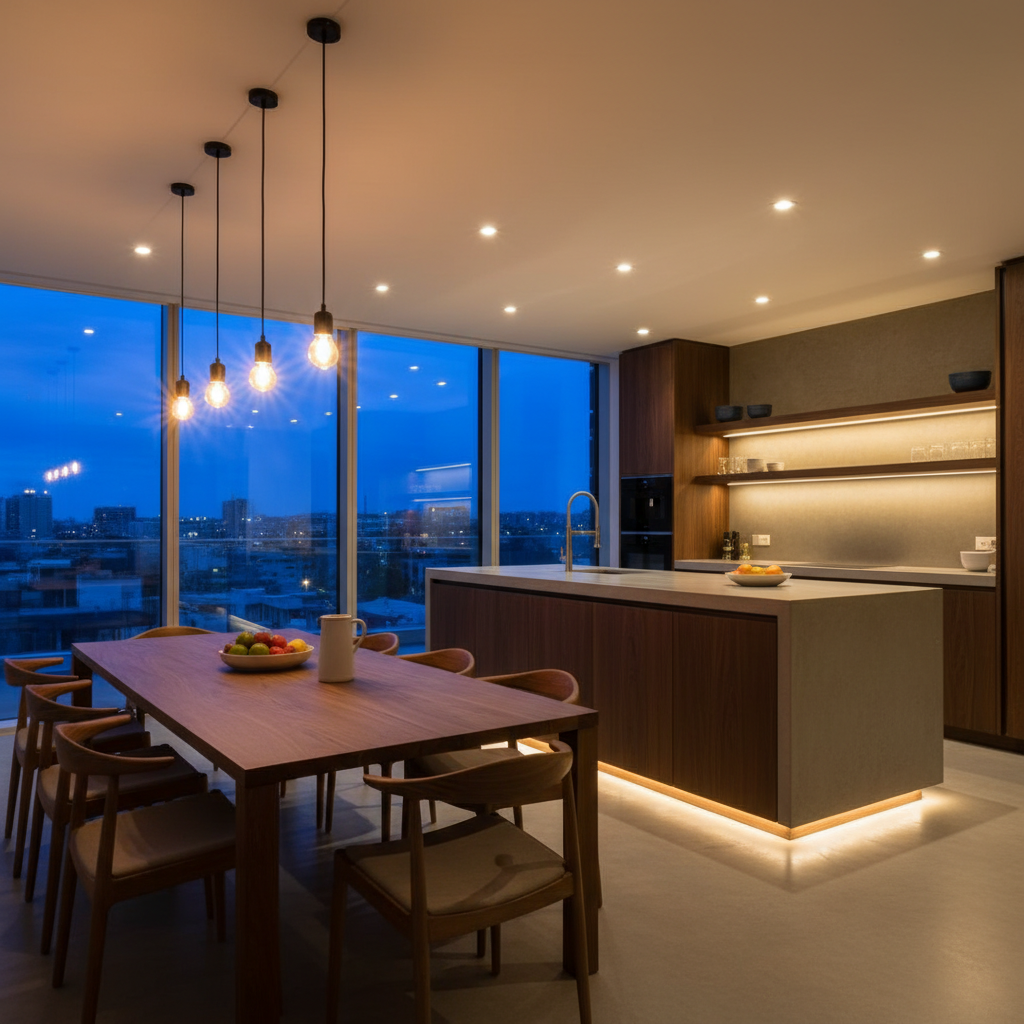

There was a time when lighting was just about flicking a switch and hoping the globe didn’t blow out too quickly. Today, however, lighting is a sophisticated system that plays a pivotal role in everything from cutting down your quarterly power bill to enhancing the ambience and value of your home or business. If you’re still relying on old, energy-hungry halogens or incandescent bulbs, you’re missing out on a massive opportunity for efficiency, safety, and superior design.
The shift to Light Emitting Diodes (LEDs) isn’t just a trend; it’s a fundamental change in how we consume electricity and design our living and working environments. But simply buying a few LED globes and screwing them in isn’t the whole story, particularly when dealing with complex setups, dimmers, or whole-house conversions. That’s where professional expertise truly shines. Opting for comprehensive LED installation transforms your space into an energy-efficient haven, ensuring you reap the full benefits these modern systems offer, right from day one.
If you’ve been considering upgrading, you likely have questions about the true payoff. Beyond the initial cost of the globes themselves, what tangible advantages does a properly executed system bring? Let’s delve into the key reasons why engaging a qualified tradie for your new lighting system is one of the smartest investments you can make for your property.
The massive savings: Why LED lighting pays for itself
For most property owners, the most compelling argument for switching to LEDs is the immediate and long-term financial benefit. It’s not just about a few dollars here and there; over the lifespan of the system, the savings are substantial, effectively paying for the initial investment and then some.
Energy efficiency explained
The primary advantage of LED technology is its incredible efficiency. Traditional incandescent bulbs waste up to 90% of the energy they consume by converting it into heat, not light. Halogens are slightly better, but still pale in comparison to LEDs, which direct nearly all consumed energy towards illumination.
Think of your power metre readings. When you switch to LEDs, you are drastically reducing the load your lighting places on your electrical system. This means lower energy consumption overall, directly translating into smaller power bills. This factor is especially crucial in larger homes or commercial premises where lighting systems run for many hours each day. Moreover, modern LEDs allow you to truly optimise your lighting usage, often integrating with sensors and timers to minimise unnecessary power draw.
Longevity and replacement costs
If you’ve ever had to haul out the ladder every few months to change a blown globe, you know the frustration (and potential danger) involved. Traditional bulbs might last 1,000 to 2,000 hours. Halogens push that to perhaps 5,000 hours. LEDs, by contrast, are rated to last anywhere from 25,000 to 50,000 hours, sometimes even more.
What does this mean in practical terms? If you run your lights for four hours a day, an LED globe could last over 17 years. This extreme longevity virtually eliminates the recurring cost of purchasing replacement globes and the labour involved in changing them. For businesses, this reduction in maintenance time and cost is a significant operational advantage, freeing up staff or maintenance budgets for other crucial tasks.
Safety first: The non-negotiable aspect of professional installation
While the financial benefits are appealing, safety should always be the top priority. Electrical work is not a DIY job, and when dealing with sophisticated modern lighting systems, the risks associated with improper installation are simply too high to ignore.
Compliance and peace of mind
When you engage a licensed electrician for your lighting project, you are ensuring that the work adheres to strict local building codes and electrical safety standards. This is critical for several reasons:
- Wiring Integrity: LEDs often require different wiring configurations, drivers, or transformers than older systems. An electrician ensures these components are correctly matched and installed to prevent overheating or fire hazards.
- Insurance Requirements: Should an electrical fault occur, your insurance provider will almost certainly require proof that all electrical work was completed by a licensed professional and complies with current regulations.
- Certification: Professional installers provide a Certificate of Electrical Safety where required, giving you legal and physical peace of mind.
Trying to navigate complex council regulations or technical specifications yourself can lead to costly mistakes down the line. A professional understands the nuances of modern power systems and guarantees the installation is compliant and safe.
Avoiding DIY disasters
Many homeowners are tempted to take on the task of upgrading to modern lighting systems themselves, particularly for simple replacements. However, modern LED systems often involve more than just screwing in a new bulb. Downlights, strip lighting, and integrated fixtures require precise cut-outs, secure wiring connections, and careful handling of drivers and transformers.
Improper installation can lead to flickering lights, premature failure of the expensive LED units, or, worst of all, serious electrical faults. We’ve all heard stories about well-meaning DIY enthusiasts who end up needing an emergency callout after realising they’ve tripped the main circuit or created a dangerous wiring situation in the ceiling space. When you consider the value of your property and the safety of your family, relying on expert installation is the only sensible choice.
Enhancing aesthetics and property value
Beyond the practical benefits of cost and safety, the visual impact of professionally installed LEDs is transformative. Lighting is essentially the invisible architecture of a space, defining mood, highlighting features, and making areas functional.
Customised lighting design
LEDs offer unparalleled flexibility in design, allowing you to control not just brightness, but also the ‘colour temperature’ of the light. Do you need a cool, bright white light (around 4000K) for a functional laundry or kitchen prep area? Or perhaps a warm, inviting glow (around 2700K) for the living room or bedroom?
A professional service doesn’t just install the hardware; they help you design a system that complements your interior design and lifestyle. They can advise on optimal placement to minimise shadows, use strip lighting to create dramatic accents, and employ advanced dimming technology to set the perfect mood for any occasion. This level of customisation ensures that the final result is functional, beautiful, and perfectly tailored to your needs.
Modernising spaces
The clean lines and low profile of modern LED fixtures instantly update a tired space. Gone are the days of bulky, heat-emitting halogen downlights. Today’s slimline fittings create a seamless look that appeals to contemporary design sensibilities.
Furthermore, well-designed lighting significantly boosts the perceived value of a property. When potential buyers or renters walk into a space that is brightly, efficiently, and stylishly lit, it leaves a lasting positive impression. Investing in professional LED lighting is therefore not just an expense; it’s an asset that contributes to the overall appeal and marketability of your property.
Beyond the bulb: Smart features and future-proofing
The modern era of lighting extends far beyond the basic on/off switch. Professional electrical services can integrate your new LED system into the broader ecosystem of smart home technology, providing convenience and advanced control.
Integrating smart home technology
Many high-quality LED systems are designed to integrate seamlessly with digital assistants and smart home hubs. This allows you to control your lighting using voice commands, smartphone apps, or automated schedules. Imagine being able to switch off every light in the house from the comfort of your bed, or setting your outdoor lighting to automatically turn on as dusk approaches.
A professional installer is trained to set up these complex integrations correctly, ensuring that all components communicate effectively. They handle the technical programming required to realise the full potential of smart lighting, making your home more convenient and energy-efficient. This level of detailed work ensures your system is truly future-proofed, ready for the next generation of home automation.
Minimising environmental impact
While often overlooked, the environmental benefits of LEDs are substantial. By dramatically reducing energy consumption, LEDs lessen the demand on power grids, which often rely on fossil fuels. Moreover, because they last so long, fewer globes end up in landfill. Unlike older fluorescent tubes, LEDs typically do not contain mercury, making them a safer and more environmentally conscious choice.
For those who prioritise sustainability, choosing high-quality, professionally installed LEDs is an active step towards reducing their carbon footprint. It’s a small change that yields big results for both your wallet and the planet.
Why professional expertise matters for your LED installation
The complexity of modern lighting systems cannot be overstated. While a single LED globe might seem straightforward, a whole-house or commercial upgrade involves detailed planning, load calculations, and specialised tools. This is where the value of professional led installation truly comes into its own.
Addressing complex wiring and dimmers
One of the most common issues homeowners face when attempting DIY LED installation is incompatibility with existing dimmer switches. LEDs draw so little power that they often require specific, low-load compatible dimmers. If the wrong dimmer is used, you’ll experience annoying flickering, buzzing noises, or premature failure of the system.
A skilled electrician understands these technical requirements implicitly. They can assess your current setup, recommend the appropriate drivers and dimmers, and install them correctly the first time. This prevents frustrating trial-and-error purchasing and ensures smooth, silent, and reliable operation.
The importance of proper heat management
While LEDs produce far less heat than halogens, they are still sensitive to high temperatures. If installed in an enclosed fitting or in a ceiling space with poor ventilation (especially if insulation is improperly handled), the heat can significantly reduce the lifespan of the LED unit, negating the primary benefit of longevity.
Professional installers are trained to consider ventilation and heat dissipation in every placement, particularly when fitting recessed downlights near roof insulation. They ensure adequate clearances are maintained, which is a vital aspect of maximising the return on investment from your lighting purchase.
Furthermore, when considering the comprehensive process of expert installation of LED lighting, remember that consistency is key. A professional guarantees that all lights across your property will match in colour temperature, brightness, and quality, avoiding the patchwork look that often results from buying different brands or types of lights over time.
Making the right choice for your property
The decision to switch to LED lighting is simple; the execution requires precision and expertise. By choosing professional installation, you are investing in safety, compliance, long-term savings, and superior aesthetic results.
From ensuring your new lights comply with all local safety standards to integrating complex smart features, a qualified electrician manages the entire process seamlessly. This allows you to sit back, relax, and enjoy the brilliantly lit, energy-efficient future of your home or business, confident that the work has been completed to the highest possible standard. Don’t settle for less when it comes to the safety and efficiency of your electrical system.
Frequently asked questions about LED installation
How much does a professional LED installation cost?
The cost of installation varies widely depending on the size of the property, the number of fixtures being replaced, the complexity of the wiring (e.g., whether new circuits or dimmers are needed), and the quality of the LED fittings chosen. While the upfront investment is higher than a simple DIY globe swap, the long-term savings on energy bills and maintenance often result in a payback period of just a few years. Always get a detailed, itemised quote from a licensed electrician that separates labour and materials.
Are LED lights truly brighter than traditional lights?
LEDs are generally measured in lumens (brightness) rather than watts (power consumption), making them highly efficient. A typical 8-watt LED can produce the same light output (lumens) as a 60-watt incandescent bulb. Therefore, you get the same or greater brightness while consuming significantly less power. Professional installers help you select the correct lumen output and colour temperature to achieve the desired brightness for each specific area.
Can I install LED lights on existing wiring?
In many cases, when you are installing LED lights, yes, you can use existing wiring, but there are important caveats. If you are replacing old halogen downlights, the existing transformers might not be compatible with the low voltage required by LEDs, potentially causing flickering or rapid failure. Furthermore, if you are installing new fixtures or adding circuits, wiring upgrades may be necessary to meet current safety standards. A professional assessment is crucial before proceeding with any major electrical changes.
How long do LED lights actually last?
High-quality LEDs are typically rated for 25,000 to 50,000 hours of operation. In a domestic setting running lights for four hours a day, this translates to over 17 years. Unlike traditional bulbs that simply burn out, LEDs generally dim very slowly over time. This remarkable lifespan is a major benefit, drastically reducing the need for maintenance and replacement purchases.
Do I need specific dimmers for LED lights?
Yes, absolutely. Standard dimmers designed for high-wattage incandescent bulbs are generally incompatible with low-wattage LED systems. Using the wrong dimmer will usually result in flickering, buzzing, or inconsistent performance. Professional installation includes selecting and fitting LED-compatible dimmers that are specifically designed to handle low loads, ensuring smooth and silent operation across the entire dimming range.
Also Read: LED Installation: What’s the Right Type for Your Home?
