
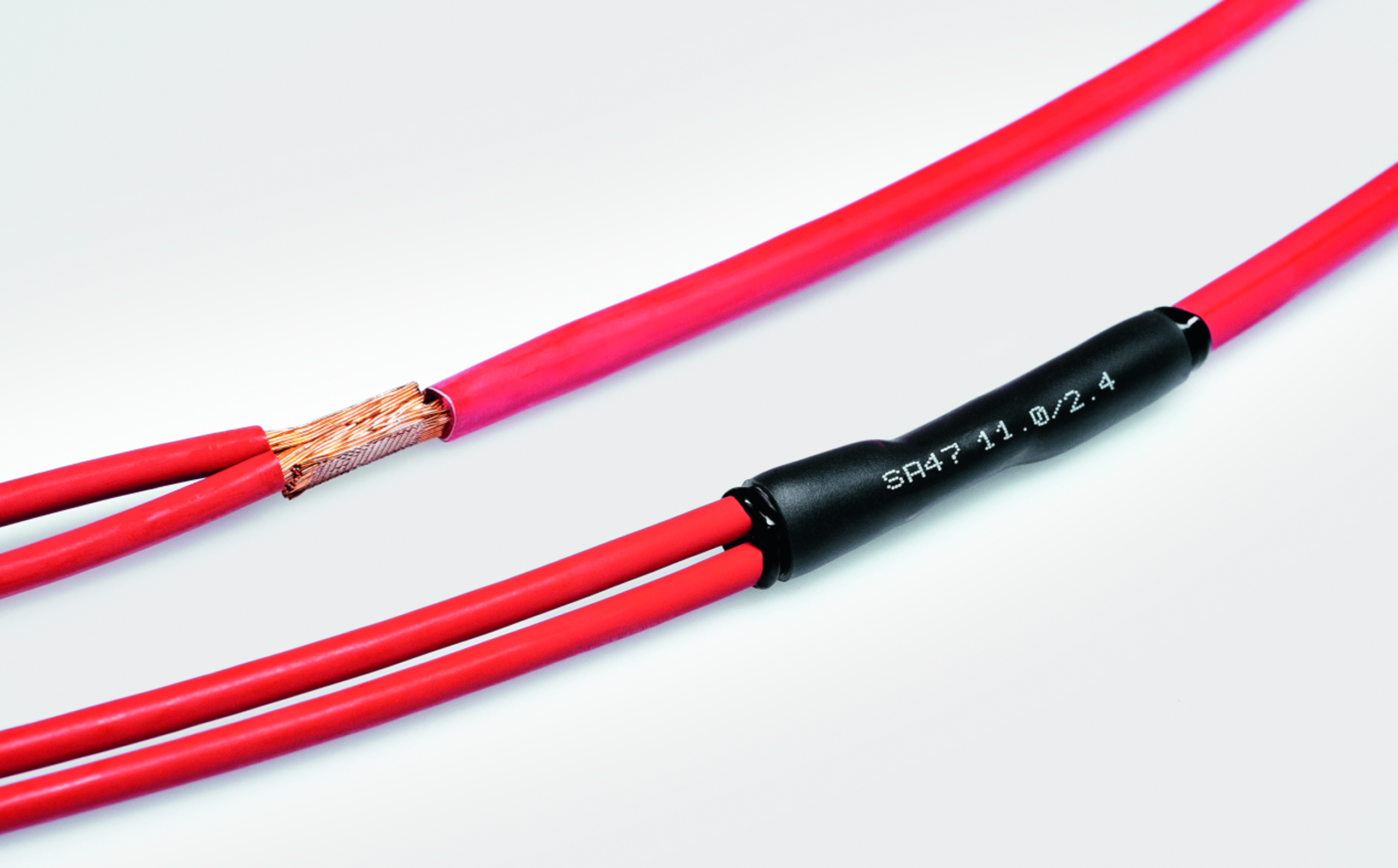

Cable heat shrink tubing is commonly used in a variety of applications across multiple industries. It helps to improve electrical safety, with secure wire and cable bundling, colour-coding to help with identification for maintenance and repair issues, as well as strain relief and electrical insulation. Alongside these practical benefits, cable heat shrink tubing is beneficial in protecting cables against chemicals, abrasion, and the working environment. A simple upgrade to use cable heat shrink and utilising the correct techniques and methods helps to improve efficiency and safety.
What is cable heat shrink tubing?
Heat shrink tubing offers protective sleeving that conforms to the size and shape of the substrate. This polymer shrinkable sleeve shrinks when exposed to heat, providing electrical insulation for wires, cables, connectors, terminals, and splices across a wide range of applications and in many different industries. It offers an effective alternative to taping, potting, or moulding, perfect for adding protection in environments where extreme temperatures, moisture, dust, and chemicals are present.
What are the features of heat shrink tubing?
The main features of heat shrink tubing help to improve the safety and efficiency of cables, ensuring the integrity of applications, even in the most extreme working environments. The main features include:
- An effective protective layer that covers the joints and repairs. This helps to prolong the lifecycle of the system, as any joints and repairs will last longer.
- It helps to prevent any dust or moisture from entering the cable splices, maintaining the integrity of the cabling.
- Cables are protected against UV or chemical abrasion, as well as against any corrosive substances that would damage the cable system.
- It insulates cables and wires against intense heat quickly.
- Good protective sleeving is colour coded, helping workers to quickly identify cables in emergency situations or for regular maintenance and repair tasks.
- On a practical level, protective tubing tidies up cables and wiring, helping to induce better connectivity and lower pressure.
What materials are used for heat shrink tubing?
Each application has a different requirement, and therefore, there are a variety of materials used in cable heat shrink products, including different sizes, colours, and shrink ratios. Adhesive coating is used within some products, helping to secure the tubing to wires and different components.
Cable heat shrink provides protection for various applications. With a flexible thin wall, cable heat shrink tubing is designed for effective use within electrical, industrial, and pipe applications across many industries. Where there is a requirement for electrical and mechanical insulation, it provides a high level of protection. This boosts safety standards while protecting the integrity of the application in use, offers strain relief, and improves identification markers through colour coding, helping future workers and maintenance teams to quickly identify cabling and work safely and efficiently. At a time when the technology within myriad sectors continues to evolve at a fast pace, we remain reliant on cabling systems. This means managing those cables is still a vital process in every workplace, and ensuring the safety of these cables is top of that list.
