
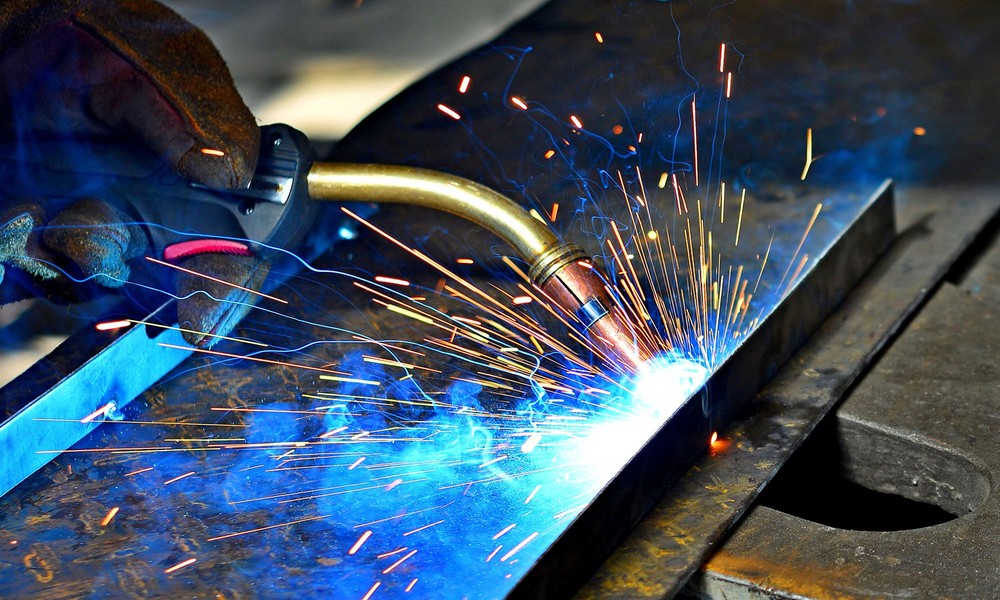

Welding Procedure Specification (WPS) Certification Services in the UK
In heavy industry, the integrity of every joint is paramount. A formal welding procedure specification acts as the definitive guide for creating strong, reliable connections. Gaining official approval for these methods is not just a technical step; it is a fundamental pillar of operational safety and product quality.
This rigorous approval process is critical across many sectors. Industries like oil and gas, nuclear energy, aerospace, and structural fabrication all depend on it. They require absolute confidence that their joined components will perform under extreme pressure and stress.
Professional certification services provide the documented evidence that a method has been thoroughly tested and qualified. This documentation becomes a core quality control tool. It outlines exact parameters, materials, and techniques to ensure consistent and safe results every time.
Ultimately, this formal validation is a critical business necessity. It demonstrates due diligence, helps meet strict contractual obligations, and satisfies regulatory bodies. Investing in it is a powerful strategy for risk mitigation and gaining a competitive advantage.
Key Takeaways
- Formal procedure approval is an essential mechanism for quality assurance.
- It ensures welded structures meet rigorous safety and performance benchmarks.
- Organisations use it to demonstrate regulatory and standards compliance.
- The process generates documented proof that methods are tested and qualified.
- Certified documents guide operators through precise parameters and techniques.
- It serves as a fundamental tool for mitigating operational and financial risk.
- Possessing certified procedures can provide a significant market advantage.
Introduction to Welding Procedure Specification (WPS) Certification Services in the UK
Across global industries, the shift from artisanal skill to codified process has defined quality assurance. This evolution is particularly evident within the United Kingdom’s advanced manufacturing and construction sectors.
Industry Background and Relevance
Formalised welding procedures have transformed from basic workshop practices into a sophisticated technical discipline. This change is driven by comprehensive international standards.
Industries like nuclear power, offshore energy, and aerospace demand absolute reliability. Here, joint integrity directly impacts public safety and asset longevity. Professional services now provide documented, repeatable processes.
This eliminates guesswork and ensures consistent results across different operators and production sites.
UK Market and Regulatory Overview
The UK maintains rigorous oversight through legislation like the Pressure Equipment (Safety) Regulation 2016 (PESR). This applies to pressure equipment and assemblies operating above 0.5 bar.
For compliance, the government appoints Recognised Third Party Organisations (RTPOs). An example is NECIT, authorised by the Department for Business and Trade.
These bodies approve methods, welders, and operators for permanent joints in accordance with PESR requirements. This framework ensures statutory compliance while offering firms a competitive edge through demonstrated technical competence.
Exploring Welding Procedure Specification (WPS) Certification Services in the UK
To guarantee performance under demanding conditions, every aspect of a material joining operation must be predefined and proven. A dedicated ecosystem of specialist providers exists throughout the United Kingdom to deliver this essential validation.
These firms offer comprehensive packages designed to cover the entire compliance lifecycle.
Service Offerings and Key Benefits
A core offering is the development of a detailed welding procedure specification. This document precisely defines techniques, materials, and parameters for a specific application. Its validity is proven through a companion procedure qualification record (PQR). This involves rigorous testing to validate the method produces acceptable weld quality.
Separate welder qualification testing assesses an individual’s skill. Practical exams under controlled conditions verify they can consistently produce sound welds. Furthermore, providers offer review and approval services for existing welding procedures. This ensures continued compliance with evolving standards.
The key benefits are substantial. They include documented due diligence, improved quality consistency, and streamlined production. Providers support numerous joining processes, from MIG and TIG to more specialised methods. This professional certification delivers tangible value by reducing rework and demonstrating technical capability.
International Standards, Procedure Qualification Records and Compliance
Technical validation relies on a comprehensive system of internationally recognised benchmarks. These international standards form the backbone of a rigorous compliance framework.
They ensure that fabrication methods are developed, tested, and documented to meet global safety and performance criteria.
Integration with BS EN ISO and ASME Guidelines
Two primary families of standards govern procedure qualification. The BS EN ISO 15614 series details requirements for various joining processes.
ASME Section IX provides specific rules for pressure-retaining components. UK and European codes, like PD 5500, offer regional frameworks.
|
Standard |
Primary Focus |
Key Application |
|
BS EN ISO 15614 |
Procedure testing by process & material |
Arc, laser, friction welding |
|
ASME BPVC Section IX |
Qualification for pressure equipment |
Boilers, pressure vessels |
|
PD 5500 / EN 13445 |
Unfired pressure vessels |
UK & European market compliance |
Testing, Inspection and Certification Process
Independent third party bodies oversee the entire qualification process. They witness the production of test assemblies and subsequent examination.
A suite of tests is conducted. NDT methods like radiography check for internal flaws.
Destructive testing includes tensile and bend tests to verify mechanical properties. All inspection and testing is performed by UKAS-accredited labs.
Upon successful results, formal approval documentation is issued. This includes the vital Procedure Qualification Record (PQR).
Customised Solutions, Equipment and Quality Assurance in WPS Certification
Customisation is the cornerstone of effective quality assurance for non-standard fabrication tasks. Off-the-shelf documentation often falls short for complex assemblies or specialised materials.
Providers develop tailored solutions that address unique project challenges directly. This bespoke approach ensures every technical requirement is met precisely.
Bespoke Procedure Specifications and PQR Development featuring NWQS Ltd
Specialist firms like NWQS Ltd exemplify this collaborative model. They work closely with clients to understand specific parameters and constraints.
Development begins with comprehensive material analysis. Factors like strength, corrosion resistance, and weldability are evaluated for the base metal.
This analysis informs the creation of a custom welding procedure specification. A companion procedure qualification record (PQR) is then developed to validate the method through rigorous testing.
Efficient Equipment and State-of-the-Art Techniques
Modern validation relies on advanced technology. Inverter-based power sources offer precise parameter control for consistent results.
Facilities feature multiple process capabilities. These range from precision TIG systems to high-deposition flux-cored arc equipment.
Sophisticated heat input monitoring and digital tools ensure repeatability. Established links with accredited labs enable rapid test result turnaround.
Expertise in Customised Welding Processes
Expert knowledge optimises each joining technique. This includes selecting the correct MAG transfer mode for the application.
NWQS and similar providers offer deep process expertise. It covers precision TIG for critical components and robust MMA for structural steel.
This specialist insight creates parameter windows that balance productivity with quality imperatives. The outcome is a validated methodology perfectly aligned with production needs.
Conclusion
Where joint strength is critical, validated methodologies offer essential assurance. Formal approval for these processes constitutes core quality infrastructure.
Professional support spans the entire lifecycle. It encompasses development, parameter optimisation, and rigorous qualification testing. Independent verification confirms adherence to recognised standards.
Firms achieve tangible benefits. These include lowered technical risk and enhanced consistency in weld quality. A skilled workforce using approved methods boosts operational safety.
The market provides a comprehensive range of solutions. These address standard steel fabrication and bespoke applications. Providers deliver tailored documentation for complex projects.
Establishing robust procedures is a fundamental technical control. It prevents failures and meets contractual duties. For specific parameters or qualifications, contacting an experienced provider is advised.
FAQ
What exactly is a Welding Procedure Specification?
A Welding Procedure Specification (WPS) is a formal document that provides detailed instructions for making a sound weld. It outlines all essential and supplementary variables for a specific job, such as the base metal, filler metal, positions, and heat input. This document is a critical part of quality assurance, ensuring repeatability and compliance with the relevant project standard.
Why is third-party approval for a WPS often required?
Independent verification from an accredited body provides objective evidence that a welding procedure meets all necessary international standards, such as those from ASME or BS EN ISO. This third-party approval is frequently mandated by clients, insurers, and regulatory authorities for high-integrity applications, particularly in pressure systems and structural work, to mitigate risk and ensure safety.
How long does the procedure qualification process typically take?
The timeline for procedure qualification can vary based on the complexity of the weld and the materials involved. A standard qualification for common materials might be completed within a few weeks. More complex projects involving exotic alloys or unique joint designs will require additional development and non-destructive testing (NDT), extending the schedule. Providers like NWQS Ltd can offer guidance on accurate timelines.
What is the difference between a WPS and a Procedure Qualification Record (PQR)?
These are two linked but distinct documents. The Procedure Qualification Record (PQR) is a report of the actual test weld performed to validate the proposed variables. It records the parameters used and the results of all mechanical and NDT examinations. The WPS is then derived from the successful PQR, serving as the approved instruction for production welders to follow.
Are certification services valid for international projects?
Yes, reputable certification bodies in the UK operate to globally recognised frameworks. Their approvals are based on international standards like BS EN ISO 15614-1 and ASME Section IX, which are accepted worldwide. This ensures that documentation and qualifications are portable, supporting UK fabricators working on global energy, maritime, and construction projects.
What factors influence the cost of obtaining certification?
Costs are influenced by the scope of qualification, the number of procedures needed, the type of destructive and non-destructive testing required, and the materials to be joined. Developing a bespoke procedure for a specialised application will involve more resource than qualifying a standard carbon steel weld. A detailed quote from a provider will outline all testing and documentation fees.
