
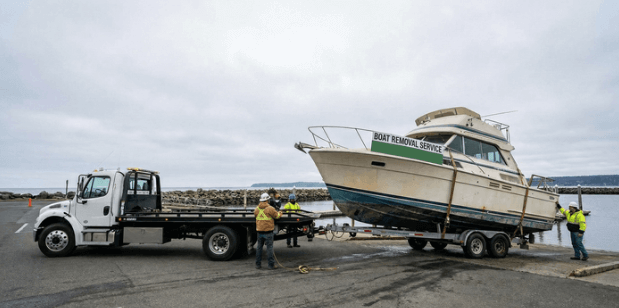

A boat must be moved off water or land with specialized tools. boat removal in St Petersburg FL uses marine-specific equipment, hydraulic cranes, and custom trailers. The work differs completely from regular towing services. Crews need training in marine procedures, weight calculations, and keeping vessels intact during extraction and transport. Regular automotive equipment doesn’t work for boat removal. The shapes, weights, and materials of vessels require custom lifting gear. Take a 30-foot sailboat. It weighs several tons, but has a deep keel that sticks out below water. Cranes must have sufficient reach and strength to lift a vessel without hitting nearby structures. Powerboats create different problems. Their width and weight concentrate toward the stern engines. Balance point calculations become crucial during lifting.
Hydraulic lifting systems
Marine-grade hydraulic lifts anchor professional boat removal work. These systems generate enormous lifting power through hydraulic pressure. Commercial units handle 20 to 100 tons, depending on vessel size. The hydraulic advantage delivers controlled lifting speeds, essential when pulling vessels from water. Rapid movements create dangerous swinging or shifting. Operators constantly adjust lifting rates. They respond to how the vessel behaves, to wind or current, to clearance needs around docks and other boats. Hydraulic systems also give precise positioning control. They lower vessels onto transport trailers with millimeter accuracy. This ensures proper weight distribution across trailer bunks. It prevents hull stress that could crack fiberglass or wreck structural members.
Mobile crane work needs extensive operator training and certification. Operating cranes near water introduces complications you don’t face on land. Waterfront surfaces run soft or uneven. Outriggers need placement on stabilisation pads that spread crane weight across an adequate surface area. Crane operators work through load charts. They account for boom length, angle, and radius. Lifting capacity must exceed vessel weight with proper safety margins. Wind matters heavily in safe lifting. Guidelines prohibit crane work when sustained winds cross specific thresholds. Vessels become sails, catching wind. This generates lateral loads that destabilize cranes.
Trailer configuration expertise
Boat trailers aren’t universal. They’re specialized carriers configured for specific hull designs. Sailboat trailers have tall masts and adjustable keel supports for deep draft vessels. Powerboat trailers provide wide bunks distributing weight across the planning hull bottoms. Custom trailer setup requires understanding hull shapes and weight patterns. You position bunks and rollers to support vessels without creating pressure points. Bad trailer configuration concentrates weight on small hull areas. This cracks gelcoat or damages structural stringers. Professional removal services keep trailer inventories spanning various sizes and configurations. They select appropriate carriers for specific vessels rather than forcing boats onto the wrong trailers.
Transport logistics go beyond hooking trailers to trucks. A vessel’s dimensions often exceed standard road dimensions. This requires oversize load permits, route planning avoiding low bridges, and escorting vehicles on certain highways. Ships are secure using structural hard points and specialized straps and chains. Not through windows or hardware that could pull free during transport. Mast support systems stop tall sailboat masts from swaying during road travel. Powerboat windshields get a protective covering, preventing stone chips at highway speeds.
Personnel training requirements
Crew training covers marine terminology, vessel construction knowledge, and safety protocols for waterfront environments. Identifying lifting points and weight distribution helps crews recognize structural concerns. Safety training addresses waterfront hazards. Slippery docks. Exposure to marine organisms. Electrical hazards from shore power connections. Teams practice emergency procedures for equipment failures, uncontrolled vessel swinging during lifts, or environmental events like sudden storms requiring the rapid securing of partially-lifted vessels. This specialized training separates marine removal professionals from general hauling operators. It ensures vessel protection and personnel safety throughout complex extraction operations.
