
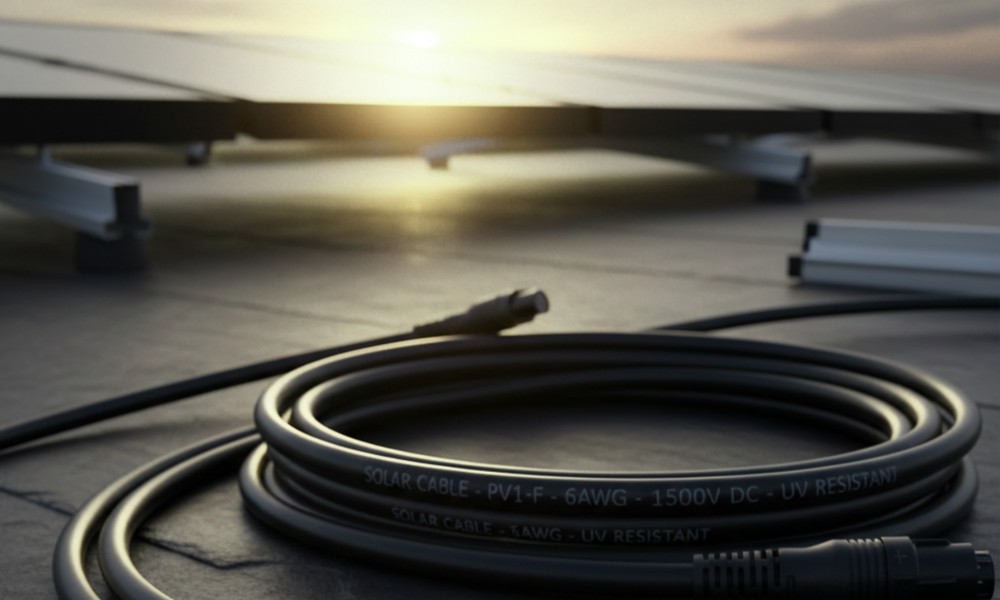

When installing a solar power system, most people focus on panels and inverters. But there’s a critical component that often gets overlooked: solar cables. The right cables can significantly boost your system’s efficiency, while poor-quality cables silently drain away your investment through power loss.
The Hidden Cost of Power Loss
Every solar installation loses some energy during transmission from panels to your inverter and electrical system. This loss happens due to electrical resistance in the cables. Poor cable selection can result in 3-7% power loss, which translates to thousands of dollars over your system’s 25-year lifespan.
The loss follows a simple principle: as electricity flows through cables, resistance creates heat, wasting energy. This is called resistive loss, calculated by the I²R formula-where current (I) and resistance (R) determine how much power disappears as heat.
What Makes Solar Cables Special
Solar cables aren’t just ordinary electrical wires. They’re engineered for harsh outdoor conditions and high-efficiency power transmission.
Key features include:
- Tinned copper conductors that resist corrosion better than standard copper
- Double insulation layers (typically XLPE or EPR) that withstand extreme temperatures from -40°C to +120°C
- UV-resistant outer jackets that prevent degradation under constant sunlight
- Flexibility for easy rooftop installation without cracking
Quality solar cables meet international standards like EN 50618 and UL 4703, ensuring they perform reliably for decades.
Solar DC Cables: Reducing Losses from Panel to Inverter
Solar DC cables connect your panels to the inverter, carrying direct current at high voltages (typically 600-1500V). This is where proper cable selection matters most.
How DC cables minimize power loss:
Proper sizing prevents resistance buildup. Using the correct cable thickness (measured in mm²) for your system’s current ensures minimal resistance. For example, a 6mm² cable handles more current with less loss than a 4mm² cable over the same distance.
Quality conductors maintain low resistance. Tinned copper multi-strand conductors provide excellent conductivity while remaining flexible. The tinning prevents oxidation, which would otherwise increase resistance over time.
Voltage drop stays within limits. Industry best practice keeps voltage drop below 3% from panels to inverter. Properly sized solar DC cables easily achieve this, preserving more of your generated power.
Consider this example: A 5kW solar system with undersized cables might lose 5% of production annually-about 250kWh. Over 25 years, that’s 6,250kWh lost, costing you $1,500-2,000 in wasted electricity.
Efficiency Features That Matter
Insulation technology plays a crucial role. Double-insulated solar cables prevent current leakage and maintain performance in extreme heat. When rooftop temperatures exceed 70°C in summer, inferior cables degrade faster and increase resistance.
Connector quality is equally important. Solar cables use MC4 connectors designed for minimal contact resistance and weatherproof sealing. Poor connections create hotspots and additional power loss.
Choosing the Right Cables
For most residential installations, 4mm² cables work for short runs (under 10 meters), while 6mm² cables suit longer distances or higher currents. Commercial systems often require 10mm² or larger.
Critical selection factors:
- Calculate your system’s maximum current
- Measure the distance from panels to inverter
- Account for ambient temperature in your region
- Choose cables rated for at least 1.5kV DC
Don’t skimp on cable quality to save a few hundred dollars upfront. Premium solar cables cost 20-30% more than basic alternatives but prevent thousands in energy losses.
The Bottom Line
Solar cables are your system’s circulatory system-they must efficiently transport every watt you generate. Investing in properly sized, high-quality solar DC cables ensures:
- Maximum energy harvest from your panels
- Minimal power loss during transmission
- Reliable performance for 25+ years
- Better return on your solar investment
When evaluating your solar installation, demand to know the cable specifications. Your installer should provide voltage drop calculations and use certified solar-grade cables. This simple attention to detail can improve your system’s lifetime efficiency by 5% or more-making quality cables one of the smartest investments in your solar journey.

Comments are closed, but trackbacks and pingbacks are open.