
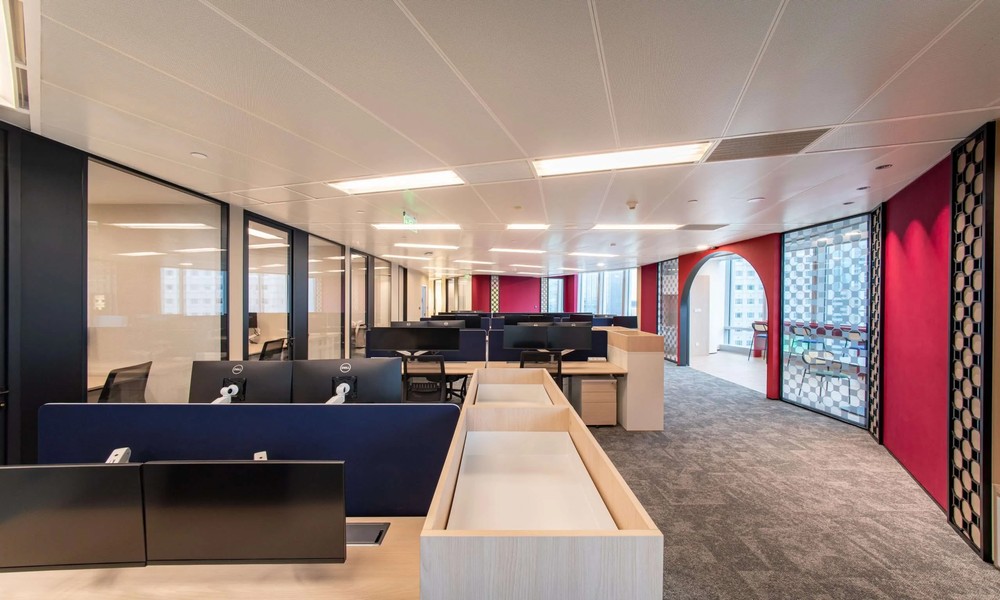

Office renovation projects have traditionally focused on layout planning, furniture selection, and interior design. However, as businesses become increasingly dependent on digital infrastructure, workplace technology has emerged as one of the most critical components of a successful office transformation.
In Hong Kong’s competitive business environment, organisations are no longer simply creating attractive workplaces. They are building technology-enabled environments designed to support collaboration, hybrid working, operational efficiency, and future growth. As a result, workplace technology planning is increasingly moving from an afterthought to a central part of the office renovation process.
Modern Offices Depend on More Than Physical Space
A modern workplace relies on far more than desks and meeting rooms. Employees expect seamless Wi-Fi connectivity, reliable video conferencing systems, wireless presentation tools, smart meeting room booking systems, and secure access control technologies. Many organisations also require structured cabling networks, server infrastructure, cybersecurity measures, and integrated communication systems.
These technologies form the foundation of daily business operations. When they are not considered during the early planning stages of an office renovation, businesses often encounter costly modifications and operational disruptions after construction has already begun.
For this reason, workplace technology is increasingly being planned alongside workplace design rather than being treated as a separate project.
Hybrid Work Has Changed Office Requirements
The rise of hybrid work has fundamentally changed how companies use office space.
Meeting rooms are now expected to accommodate both in-person and remote participants. Collaboration spaces require high-quality audio and video systems. Employees moving between home and office environments expect consistent access to business systems and communication platforms.
Organisations renovating their offices today are often investing in technology that enables flexibility and supports future workplace strategies. Businesses planning a relocation or renovation project may find it useful to review examples of how technology, workplace design, and construction can be coordinated within a single project through an integrated approach to office interior design and construction.
When workplace technology is incorporated from the outset, companies are generally able to achieve better functionality while avoiding unnecessary rework later in the project.
Technology Challenges Are Often Hidden Until Construction Begins
One reason workplace technology is frequently overlooked is that many infrastructure requirements remain hidden behind walls, ceilings, and server rooms.
Issues such as insufficient network capacity, inadequate cabling pathways, poor Wi-Fi coverage, and incompatible meeting room systems may not become apparent until construction works are already underway.
At that stage, changes can be both expensive and disruptive. Businesses relocating into major commercial developments often encounter additional technical requirements imposed by landlords and building management teams. Understanding these considerations before construction begins can significantly improve project outcomes. For example, this guide to office renovation and fit out considerations within International Gateway Centre highlights how workplace planning and building requirements often need to be carefully coordinated within premium commercial properties.
Technology Is Now Part of Employee Experience
Workplace technology is no longer purely an IT concern.
Employees increasingly judge workplace quality based on their daily experience using technology. Poor video conferencing systems, unreliable internet connectivity, complicated room booking processes, and outdated collaboration tools can negatively affect productivity and employee satisfaction.
Conversely, well-designed workplace technology can improve communication, reduce friction, and create a more seamless working environment.
As companies compete for talent, technology-enabled workplaces are becoming an increasingly important differentiator.
