
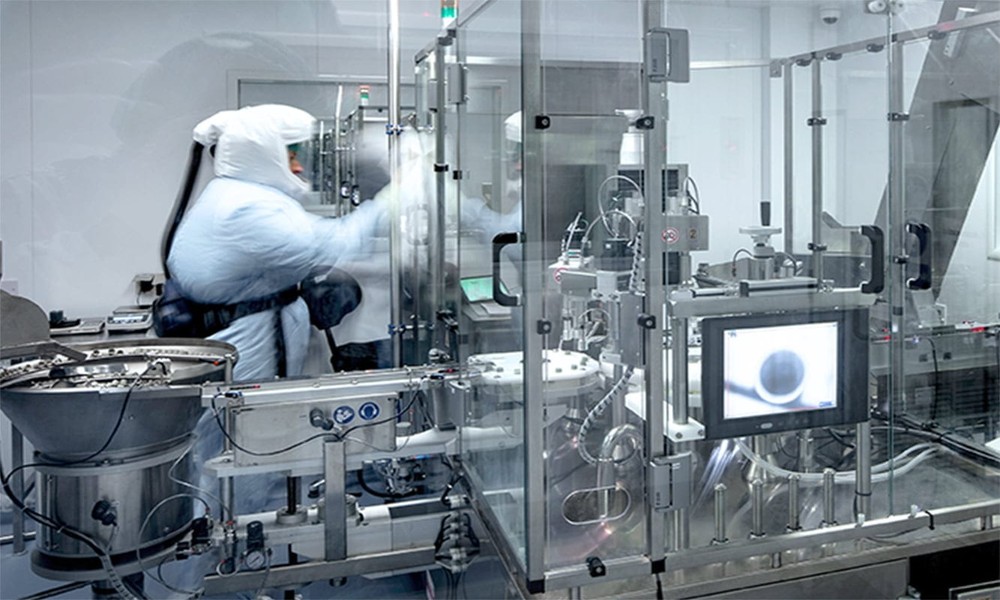

Medical clean room assembly exists to prevent contamination that could compromise patient safety during surgical procedures or implant placement. A single airborne particle lodged in the wrong location on a catheter tip or pacemaker housing can trigger infection, device failure, or regulatory recall. The discipline demands controlled environments, trained operators, and validated processes working in concert across every stage of production.
Understanding Clean Room Classifications
The International Organisation for Standardisation (ISO) defines clean room classes based on the maximum allowable number of particles per cubic metre at specified sizes. ISO Class 7, the standard for most medical device assembly operations, permits no more than 352,000 particles at 0.5 microns per cubic metre. ISO Class 5 environments, required for implantable devices contacting blood, restrict that count to 3,520 particles. The difference between these classifications determines facility design, equipment selection, and operational procedures.
HEPA Filtration and Air Handling
High-efficiency particulate air filters capture 99.97% of particles at 0.3 microns. Clean rooms maintain positive pressure differentials of 10 to 15 pascals between the controlled space and adjacent corridors. This pressure gradient prevents unfiltered air from entering when doors open. AMT’s clean room facilities cycle air through ceiling-mounted HEPA filter modules at rates exceeding 300 air changes per hour, maintaining laminar flow across workstations where operators handle exposed components. Return air grilles positioned at floor level create a unidirectional flow pattern that sweeps particles away from the work surface.
Temperature and Humidity Controls
Adhesives, lubricants, and sealants used in medical clean room assembly processes behave differently at varying temperatures. Silicone adhesives cure faster above 25 degrees Celsius, potentially reducing working time below acceptable limits. AMT maintains its clean rooms at 21 degrees Celsius plus or minus 1 degree, with relative humidity held between 40% and 50%. These parameters satisfy both material requirements and operator comfort, reducing fatigue-related handling errors during extended production shifts. Humidity levels below 35% increase electrostatic discharge risks that can damage sensitive electronic sub-assemblies within cardiac rhythm management devices.
AMT’s Clean Room Capabilities
AMT operates ISO Class 7 clean rooms within its Singapore manufacturing facility. These spaces serve medical device OEMs that require contamination-controlled assembly of precision components. The company assembled over 2.3 million medical device sub-assemblies in 2025, spanning catheter connectors, endoscopic valve bodies, and implantable pulse generator housings. Each production line follows validated work instructions specific to the customer programme it supports.
Gowning and Personnel Protocols
Operators enter the clean room through a dedicated gowning area where they don full-body coveralls, nitrile gloves, face masks, bouffant caps, and dedicated footwear. Each garment undergoes laundering and particle testing before reuse. Personnel training covers proper gowning sequence, clean room behaviour rules, and contamination awareness. AMT requires annual re-certification for every clean room operator, with quarterly practical assessments verifying technique consistency.
- Full-body coveralls laundered and particle-tested to ISO Class 5 standards
- Double gloving required for operators handling implantable device components
- No cosmetics, perfumes, or personal electronic devices permitted inside the controlled area
- Entry and exit logged electronically to maintain occupancy records for each production lot
Equipment and Workstation Design
Clean room workstations feature stainless steel surfaces that resist particle shedding and withstand daily disinfection with isopropyl alcohol solutions. AMT uses laminar flow benches providing localised ISO Class 5 conditions within the broader ISO Class 7 environment. Tooling and fixtures remain permanently inside the clean room, undergoing weekly ultrasonic cleaning and inspection to prevent cross-contamination between product lines. Magnification systems at each station allow operators to verify component placement and adhesive application at 10x to 40x enlargement.
“Singapore’s reputation for manufacturing quality gives our medical device sector a competitive advantage in global markets,” said Ms. Gan Siow Huang, Minister of State for Manpower and Education. “Clean room capabilities represent a critical part of that quality infrastructure, especially as device complexity increases.”
Validation and Monitoring
Regulatory agencies require documented evidence that clean room environments consistently meet their specified classification. AMT conducts particle count measurements at defined grid points across each clean room, sampling at rest and during operations. Results feed into environmental monitoring databases that track trends over months and years.
Viable particle monitoring supplements non-viable counts. Settle plates and active air samplers detect microbial contamination that particle counters alone cannot identify. AMT’s microbiologist reviews colony counts weekly and investigates any result exceeding alert levels, which the company sets at 50% of the action limits defined in its validated procedures.
Integrating Assembly with Upstream Machining
Medical devices benefit when machining and sterile assembly in clean rooms happen within the same facility. Transporting semi-finished components between separate locations introduces contamination risks and extends lead times. AMT’s integrated model moves parts from CNC machining through deburring, cleaning, and passivation into the clean room without leaving the building. This proximity reduces work-in-process inventory and shortens turnaround from raw material to packaged assembly.
Incoming parts enter the clean room through a material airlock equipped with a pass-through chamber. Operators unpack components in a staging area, inspect them under magnification, and transfer approved parts to assembly workstations. Rejected parts return through the airlock with documented non-conformance reports that trigger supplier corrective actions.
The growing complexity of surgical instruments and implantable devices makes medical clean room assembly a requirement rather than an option for manufacturers seeking regulatory approval across international markets, and facilities that combine precision machining with validated clean room environments deliver the consistency that patient safety demands.

Comments are closed, but trackbacks and pingbacks are open.