
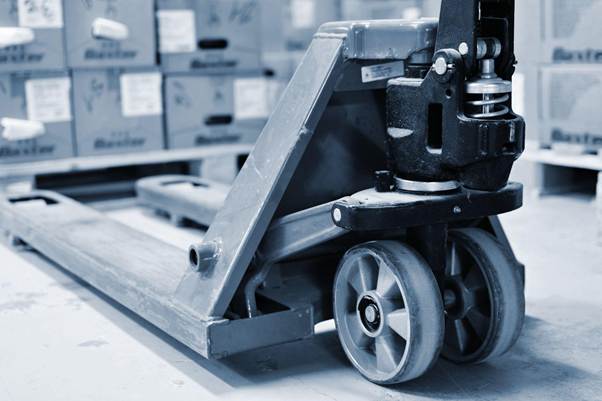

If you’ve ever underestimated the humble forklift or scoffed at a conveyor belt’s ability to streamline operations, it’s time to rethink. Material handling equipment might sound like industrial background noise. But it’s the silent workhorse behind virtually every successful operation, manufacturing plants, warehouses, construction sites, and even airports. From ensuring safety and reducing human effort to enhancing overall productivity, material-handling equipment is the unsung hero of logistics and operations. This article takes you on a journey that demystifies the role of this essential equipment, uncovers commonly overlooked truths, and maps out how businesses can make the most of their investment.
From Muscle Power to Machine Precision
Once upon a time, materials were transported the hard way by human muscle and sheer perseverance. But as industries scaled, so did the need for faster, safer, and more efficient transport systems. This was the beginning of modern material handling equipment. Over the decades, cranes, trolleys, and hoists evolved into sophisticated electric-powered lifters, modular conveyor systems, and automated guided vehicles (AGVs).
Mastering the selection and implementation of material handling equipment is both a science and an art. The science lies in understanding load capacities, reach limitations, and power consumption. The art comes in when adapting this machinery to match the ever-shifting floor plans, storage needs, and output demands of various industries. Singapore, with its fast-paced industrial and construction sectors, is a perfect showcase of this mastery in action. The landscape is dotted with machinery doing everything from stacking timber to moving tonnes of steel beams, much of it orchestrated with alarming precision.
Whether it’s a hydraulic drum lifter or a battery-operated pallet truck, the goal has always been consistent: reduce physical strain, prevent injury, and move more in less time.
The Bits You Never Think About
Despite the ubiquity of material handling equipment, several nuances are regularly glossed over. First among them is maintenance. These machines do the heavy lifting, literally, but operators often neglect scheduled servicing. This can result in unexpected breakdowns that stall operations and inflate repair budgets.
Another easily overlooked point is floor compatibility. It’s surprisingly common to invest in a shiny new piece of equipment only to find that it can’t navigate your flooring type or ramp gradients. Low-clearance issues, narrow aisles, and uneven ground can dramatically reduce the effectiveness of even the best-rated equipment.
And then there’s ergonomics. This is often treated as an afterthought but is increasingly recognised as a cornerstone of effective operation. Poor ergonomic design can lead to operator fatigue or, worse, long-term injuries. This is especially true in environments requiring repetitive motion or long hours on machines like stackers or reach trucks.
Finally, training is frequently underestimated. Even the most efficient machines are only as good as the people operating them. Investing in operator education and safety drills is essential, especially in sectors with high turnover or rapid onboarding.
Where to Go from Here
So, you’ve got a warehouse full of goods and a growing demand for faster turnaround. First, assess your operation’s specific needs. Are you handling fragile goods? Heavy, irregular shapes? High-throughput inventory? The answers to these questions should guide your equipment choices.
Incorporating smart technology is increasingly becoming non-negotiable. IoT-enabled devices can provide real-time usage data, helping predict maintenance and optimise usage. While automation may not suit every environment, semi-automated and remote-controlled options offer a manageable middle ground for smaller operations.
Future-focused planning also means thinking about scalability. As your business expands, will your material handling system scale with you? Modular systems or easily upgradable units are wise investments if expansion is in the cards.
Lastly, sustainability is no longer just a buzzword. Equipment with energy-efficient motors or those compatible with recyclable battery packs can help your operation meet green goals without compromising performance.
It’s Not Just Lifting—It’s Leveraging
Material handling equipment does far more than lift heavy things. It enhances safety, streamlines operations, and plays a pivotal role in profitability. But mastering its use involves more than browsing a catalogue and choosing the one that looks strongest. Businesses must pay attention to operational needs, hidden variables like flooring or ergonomics, and future readiness when selecting their tools. The journey from clunky machinery to seamless automation shows how far the sector has come and where it’s heading. Whether upgrading your current fleet or investing for the first time, understanding the nuances of material handling equipment is the difference between merely coping and truly excelling. In this case, what lifts your goods might lift your entire business.
