
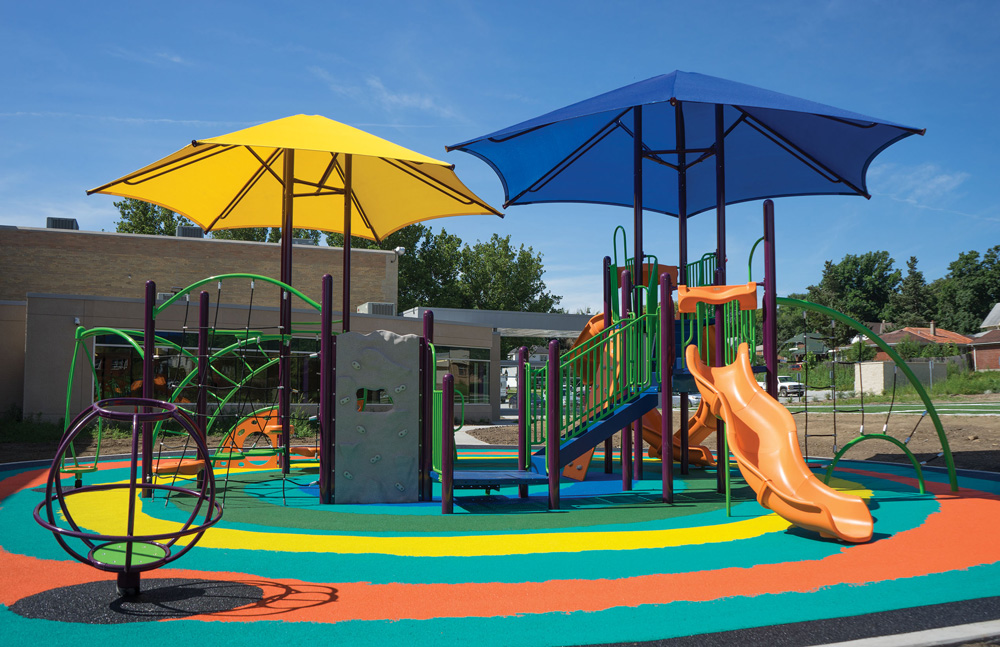

Why Shade Structures Matter
Shade structures are essential additions to outdoor spaces, especially playgrounds, parks, and recreational areas. They provide protection from harmful UV rays, reduce heat buildup, and create comfortable environments for children and families to enjoy year-round. Choosing the right materials is critical to ensuring durability, safety, and long-term value.
Fabric Options for Shade Canopies
The canopy is the most visible and functional part of a shade structure, and its material determines both performance and lifespan. Common options include:
- High-Density Polyethylene (HDPE): One of the most popular choices, HDPE is breathable, UV-resistant, and designed to block up to 95% of harmful rays. It allows airflow, keeping areas cool, and is resistant to mold and mildew.
- PVC-Coated Polyester: Offers excellent durability, waterproofing, and resistance to fading. Often used in harsher climates where weather protection is a priority.
- Acrylic Fabric: Known for vibrant colors and UV stability, acrylic fabrics resist fading but may be less breathable than HDPE.
Each material balances shade protection, breathability, and aesthetics, making the choice dependent on the playground’s environment and design goals.
Frame Materials for Strength and Stability
The frame is the backbone of a shade structure, supporting the canopy against wind, rain, and daily wear. The most common materials include:
- Powder-Coated Steel: Highly durable, corrosion-resistant, and capable of supporting large spans. Powder coating adds extra protection against rust and weather damage.
- Aluminum: Lightweight, rust-resistant, and easier to maintain, though not as strong as steel for large installations.
- Galvanized Steel: Offers excellent strength and longevity, especially when exposed to moisture or coastal environments.
The choice of frame material often depends on climate, structural design, and long-term maintenance considerations.
Durability and Maintenance Considerations
When selecting materials, it’s important to balance durability with ease of maintenance. Fabrics like HDPE require occasional cleaning but generally last 10–15 years with proper care. Steel frames can last decades if coated and maintained against rust. Choosing UV-resistant and weather-tested materials ensures that the structure will withstand sun, wind, and rain while retaining its appearance.
Aesthetic and Functional Value
Beyond protection, shade structures contribute to the overall look and feel of a playground. Brightly colored fabrics enhance visual appeal, while stylish designs such as sails or hip-and-ridge structures add architectural interest. Combining functional performance with design appeal ensures that the shade serves both practical and aesthetic purposes.
Choosing the Right Provider
Professional design and installation are just as important as material choice. Providers like Inspire Play shade structure specialize in selecting the best fabric and frame combinations for specific environments. With customized solutions, communities can ensure that their shade structures are not only durable but also safe, attractive, and perfectly suited to the playground’s needs.
Conclusion
The best shade structures are built with durable fabrics like HDPE or PVC-coated polyester and strong frames made of powder-coated or galvanized steel. These materials ensure long-lasting sun protection, reduced maintenance, and an appealing design. With expert guidance from trusted providers such as Inspire Play shade structure, communities can invest in shade systems that keep playgrounds safe, cool, and inviting for years to come.
