
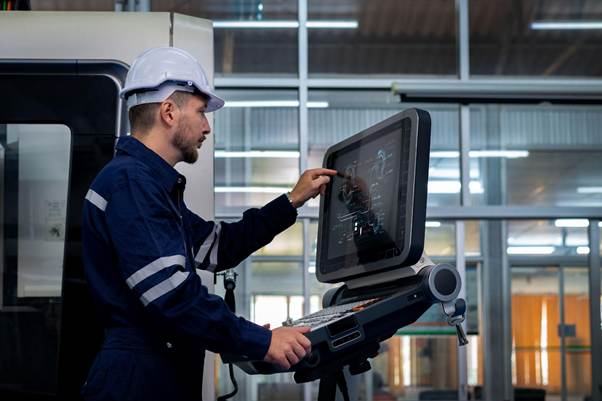

Every workshop has its stories of the old lathe: the machinist hunched over, hands steady, eyes sharp, adjusting every feed and cut by instinct and experience. These machines have long been the backbone of metalworking. Yet, the arrival of the CNC lathe has changed the rhythm of production, moving from manual craftsmanship to computer-driven precision. The question for machining manufacturers is no longer whether CNC technology matters, but how it compares with the traditional methods many still value.
Operational Differences
Traditional lathes demand constant human involvement. The machinist sets the speed, adjusts the tools, and relies on years of skill to get consistent results. The drawback, of course, is variation—two parts machined by two different people may not be perfectly alike. CNC lathes flip this dynamic. Once programmed, the computer does the work, replicating exact specifications over and over without fatigue or distraction. The shift is not just mechanical; it redefines what manufacturers can expect in terms of accuracy and repeatability.
Productivity and Efficiency
Think of the traditional lathe as ideal for one-off jobs or small batches. It is flexible, but it consumes time, from setting up to overseeing every stage of cutting. This approach is challenging to sustain in today’s markets, where speed and volume matter. On the other hand, the CNC lathe thrives in high-volume settings. Program it once, and it can run through the night with minimal oversight. This ability to scale without sacrificing quality gives CNC lathes a decisive edge, particularly for machining manufacturers chasing tighter schedules and cost savings.
Accuracy and Quality Control
Precision is where CNC technology truly outpaces its predecessor. Traditional lathes can meet tolerances, but only as far as the operator’s skill allows. Human judgment can fluctuate; machines do not. CNC lathes achieve tolerances at the micron level, producing components fit for aerospace, medical, and electronics industries where error margins are unforgiving. They also unlock the ability to machine complex shapes that would take far longer, or be impossible, on a manual system. This quality, for machining manufacturers, is not simply about meeting standards but about competing in sectors where precision defines credibility.
Skill Requirements and Workforce Implications
A traditional lathe relies on craftsmanship built over years of practice. Those skills are valuable, but harder to find as new generations lean towards digital systems. CNC lathes demand a different expertise: programming, software handling, and data-driven troubleshooting. While the machine reduces the need for manual oversight, it raises the need for technically trained operators. This instance, for machining manufacturers, means reshaping workforce development and investing in training that blends mechanical understanding with digital fluency.
Cost Considerations
The appeal of the traditional lathe often comes down to cost. The machines are cheaper to buy and maintain, making them accessible for small workshops. Yet, this upfront affordability hides long-term expenses—higher labour costs, slower production, and the risks of inconsistency. CNC lathes require significant capital investment, but they pay back through efficiency, reduced errors, and the ability to scale production. The CNC option increasingly proves to be the more sustainable choice for manufacturers weighing short-term savings against long-term competitiveness.
Adaptability and Industry Relevance
Traditional lathes are not obsolete; they remain useful for custom jobs, prototyping, or where automation budgets are tight. But in industries pushing towards modern manufacturing, CNC lathes integrate seamlessly with CAD/CAM systems, data analytics, and even automated production lines. They are not just tools; they are part of an ecosystem driving Industry 4.0. Beyond an upgrade, CNC technology is more of a survival strategy for machining manufacturers seeking to stay relevant in global markets.
Conclusion
The debate between traditional lathes and CNC lathes is less about which is “better” and more about context. Traditional systems still hold value in specific situations, but CNC lathes have redefined what modern machining looks like. The decision often comes down to whether machining manufacturers want to maintain legacy processes or embrace digital precision to meet today’s demands. While industries continue to tighten tolerances and accelerate timelines, CNC lathes are setting the pace—and the future of manufacturing is following.
Contact Disk Precision Group to upgrade your workshop with CNC technology.
